FC Porto Away Day Guide — Reecey's European Football Travel Guides
FC Porto Away Day Guide — Reecey's European Football Travel Guides
A proper, fan-first guide to visiting the Estádio do Dragão. Built for real travellers, real matchdays, and real atmosphere.
There is something unmistakably northern about an FC Porto away day. It is not Lisbon polish and it is not a tourist postcard dressed up as football. Porto feels like a working city that happens to be beautiful, and the club feels like the sharpest expression of that character: proud, slightly chippy, and convinced that the rest of the country underestimates it. If you travel for atmosphere rather than luxury boxes, this is one of the best midweek European nights you can still buy a ticket for.

1. The City and the Vibe — Porto in a Nutshell
Porto is one of Europe’s great football cities: compact, steep, weathered, and completely wrapped up in FC Porto. The rivalry with Lisbon is not a marketing line. It sits in the way people talk about the club, in the banners, and in the way a Champions League night at the Dragão feels like a point being proved. You will hear it in bars, on the metro, and on the walk up from Ribeira when the blue-and-white shirts start to thicken.
The city itself is easy to love and slightly hard on the legs. Cobbles, sudden climbs, tiled façades, laundry hanging over alleys, and the Douro cutting the old town in two. On the Gaia side of the river sit the port wine lodges. On the Porto side sit the Sé, São Bento station, and the riverside chaos of Ribeira. The centre is walkable if you accept the hills. If you do not, taxis and Bolt are cheap by British or northern European standards.
Matchdays are lively and generally welcoming. Porto fans are intense, organised, and proud of the noise they make, but they are not looking for a fight with every visiting supporter who bought a scarf at the airport. The temperature changes when Benfica or Sporting are in town. Those nights are different. Treat them as such. Neutral colours help. Common sense helps more.
Give the city a full day if you can. An away day that starts at the turnstiles and ends at the airport is a wasted trip. Walk the Ribeira, cross the lower deck of the Dom Luís I bridge into Gaia, drink a glass of port looking back at the old town, and eat a francesinha before you start thinking about kick-off. Then go and watch football in a stadium that still understands what a European night is supposed to feel like.

2. The Stadium — Estádio do Dragão
The Estádio do Dragão holds 50,033. It opened on 16 November 2003 with a 2-0 win over Barcelona, the same night a 16-year-old Lionel Messi made his first-team debut. It was built for Euro 2004 on the eastern edge of the city, close to the site of the old Estádio das Antas, and it still feels like a purpose-built bowl rather than a converted athletics ground.
This is a clean, modern stadium with a steep rake and very few wasted seats. It does not have the crumbling romance of an older ground, and it does not pretend to. What it has is proximity, noise, and a roof that keeps the sound in. On a league Saturday it can feel efficient. On a European night it feels serious.
The two main ultra groups do the heavy lifting. The Super Dragões occupy the south stand, the Bancada Sul, nearest the metro. Colectivo Ultras 95 work the north stand. They do not take nights off, and they do not wait for the teams to come out before they start. If you have only seen Porto on television, the first thing that strikes you in person is how quickly the ground fills with sound. The second is how little dead space there is between the stands and the pitch.
There is a club museum and shop by the metro side of the ground. If you arrive early, it is worth twenty minutes. If you arrive late, ignore it. The queue for the away end is the only queue that matters.
3. Away Fans — Where You Will Be
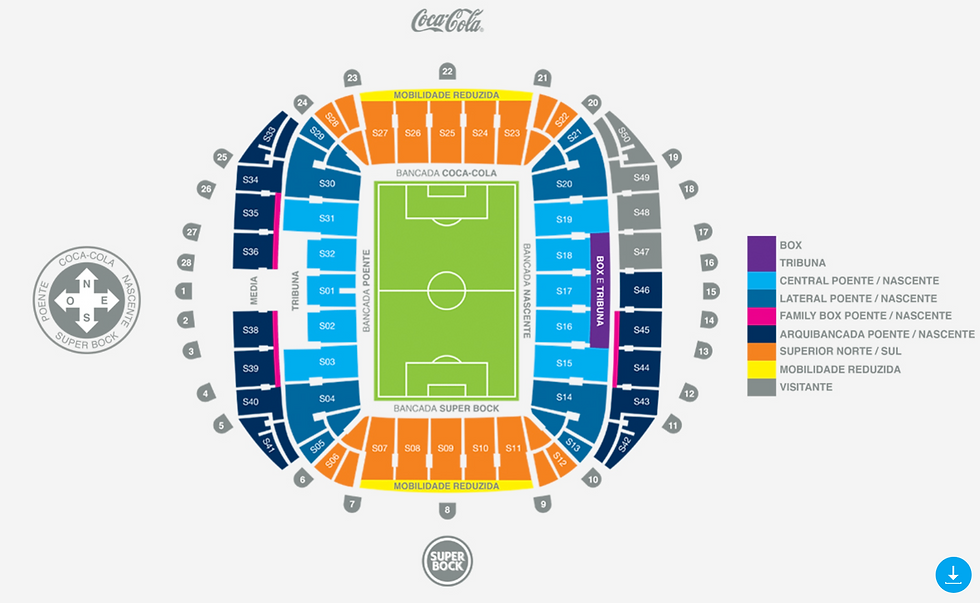
Away supporters are usually placed high in the north-east corner of the East Stand, the Bancada Nascente, in sectors around S47 to S50. For recent European ties the entry has been through Gates 19 and 20. Check your own ticket and your club’s travel notes on the day, because the exact gate can shift with the size of the allocation.
The view is better than the reputation of “upper corner” usually suggests. The rake is steep, there are no pillars, and you sit close enough to the home ends to feel the heat without being dropped in the middle of it. You are not on top of the pitch. You are also not in another postcode. For a modern UEFA away end, that is a good deal.
Expect designated routes, ticket checks, and a proper search. Recent visiting clubs have warned supporters about a long flight of stairs — around 81 steps — from ground level up to the away plaza and turnstiles. There is a lift for older supporters and anyone with accessibility needs, but the default route is steep and can bottleneck. If stairs are an issue, say so early and follow steward instructions rather than hoping the queue thins out.
Turnstiles for European games often open 90 minutes to two hours before kick-off. Arrive at the front of that window, not the back of it. On the way in you may meet netting, segregation, and a security presence that looks heavier than a domestic Saturday. That is normal here. It is managed rather than theatrical.
After full time there can be a holdback. It is not guaranteed and it is not always long, but do not book a metro that leaves three minutes after the whistle and then act surprised.
For ordinary league fixtures the process is usually calmer. For Benfica, Sporting, or a Champions League night, treat it as a European operation from the moment you leave the hotel.

4. Getting There — Transport and Logistics
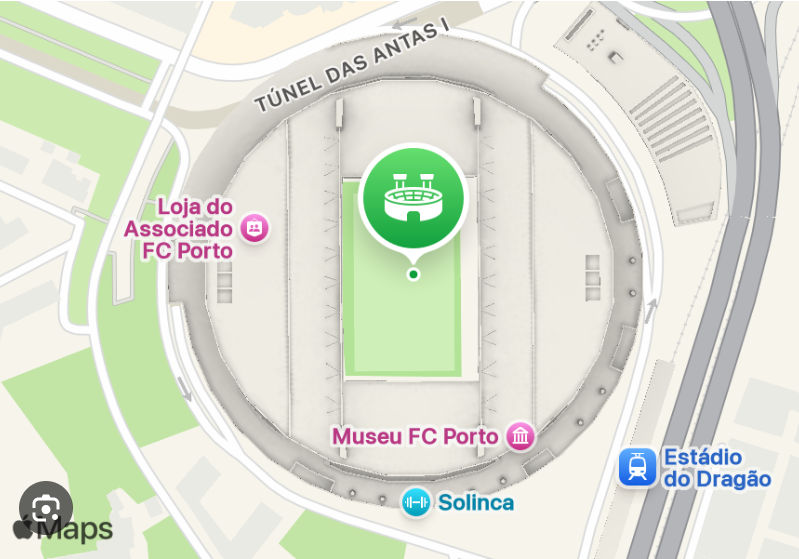
The metro is the entire answer. The station is called Estádio do Dragão and it sits beside the ground. You come up from the platforms and the stadium is in front of you. Few big European grounds make it this simple.
Four lines serve the stop: A (blue), B (red), E (violet), and F (orange). From the city you do not need to memorise the alphabet. If the front of the train says Estádio do Dragão, get on it. From Trindade, the main interchange, the ride is about eight to ten minutes. From Bolhão it is even shorter. From Campanhã it is a handful of stops.
You travel on the Andante system. Buy a reusable blue Andante card for about €0.60 and load journeys onto it at machines in the station or airport. A central Zone 2 single is about €1.40 and covers most hops around the old town and out to the ground. Validate before you board. The card is not a suggestion. If you plan several rides in a day, an Andante 24 or an Andante Tour ticket can be simpler than counting zones.
From Francisco Sá Carneiro Airport (OPO), Line E runs straight into the city. Allow 25 to 35 minutes to Trindade, a little longer if you stay on toward the stadium. The airport sits in a higher zone, so that first ride is not the cheap Zone 2 fare. Budget around €2.30 for the journey plus the card, or buy a Tour ticket if you want the whole network for 24 hours and no arithmetic. Taxis, Uber and Bolt from the airport to the centre usually run €20 to €30 and take 20 to 25 minutes if the traffic behaves. On matchday evenings it often does not. Take the metro.
Driving to the ground is the one option worth discarding. The area clogs, parking is limited, and you gain nothing that the metro does not already give you.
The walk from the historic centre is possible — 45 minutes if you are fit and not wearing the wrong shoes — but it is a hike, not a stroll. Save the walking for Ribeira and Gaia. Use the metro for the match.
5. Tickets — What Away Fans Need to Know
Buy from your own club’s allocation or from official FC Porto channels. That is the whole ticket policy, dressed in a longer sentence. Porto are strict about unofficial resale. Names sit on tickets. Tickets get cancelled. People who thought a group chat screenshot counted as a plan get turned away.
Bring photo ID that matches the name on the ticket. Passport is the cleanest option for travelling supporters. Do not assume a club card or a phone photo of a driving licence will do if stewards decide they want the real thing.
League tickets can still be found if you plan ahead and avoid the obvious fixtures. Benfica, Sporting, and European nights are a different market. Allocations for visiting Premier League and other UEFA clubs have recently sat around 2,500, which is the familiar five per cent figure. They sell. If your club has an official travel scheme, use it. Hospitality is the expensive backstop, not the first plan.
Wheelchair and ambulant arrangements are handled separately and are not always inside the main away block. If you need accessible seating, contact your club’s disability liaison as soon as the tie is confirmed rather than on the morning of the game.
Print nothing if your club says the ticket is digital, and do not rely on hotel Wi-Fi at the gate. Download it before you leave. Screenshot it as well. European turnstiles are not the place to discover that your battery died on the metro.

6. Pre-Match Pubs and Food
Porto is not a British pub city, and pretending otherwise will only make you grumpy. What it has instead is cafés, cervejarias, river terraces, and a handful of proper sports bars that understand why you came.
If you want the classic pre-match city-centre option, start around Aliados and the Baixa. Adega Sports Bar on Rua de José Falcão is the obvious meeting point: screens, booths, and the sort of place travelling supporters actually find each other. Ryan’s Irish Pub sits just behind the Ribeira and does the Guinness-and-screens job if that is the mood of the group. For something more Porto than pub, climb the Escadas dos Guindais to Guindalense Futebol Clube. The terrace looks over the Douro and the Dom Luís I bridge, the beer is still reasonably priced, and it feels like a local clubhouse rather than a tourist trap with a Premier League fixture list on the wall.
Closer to the ground, the Antas area is more functional than romantic. Café Velasquez is the old matchday name: francesinhas, pregos, and a room that has been feeding Dragão crowds for decades. Portas de São Roque, on Rua São Roque de Lameira, is the scarf place. Visiting fans have been leaving colours on the ceiling for years. Eat there if you want a sit-down meal within reach of the metro rather than a last beer in the centre and a prayer that the train is on time.
Do the city first, then move. Two or three hours before kick-off is when seats disappear. On a European night, make that three.
Eat properly. The francesinha is the local heavyweight: wet-cured meats, cheese, tomato-beer sauce, often a fried egg, always a commitment. Bifanas — pork sandwiches, simple and perfect with a Super Bock — are the better idea if you still have to climb 81 steps. Pastéis de nata are for the morning after. Inside the stadium, most kiosks are card-only. Do not arrive depending on a single crumpled note and a hopeful smile. Beer and snacks are fine, not special. The special part is outside.

7. Safety and Matchday Behaviour
Porto is a safe city for travelling supporters if you behave like a guest and not like a stag do that took a wrong turn. The historic centre is busy, well lit, and used to visitors. The walk from metro to away gates is short and controlled on big nights.
Follow stewards. Flags, drums, and poles are often restricted, especially under UEFA rules. If your group wants a display, clear it through your club and assume the answer might still be no. Stick to the designated away entrance. Do not test whether a home gate “looks quieter.” It will not be quieter when they ask for your ticket.
Near the ultras the atmosphere is loud and hostile in the football sense. That is the point of standing in a stadium like this. It is usually respectful in the human sense. The difference matters. Do not film people in a way that turns them into content. Do not rise to the first chant that mentions your club. Do not wear home colours into a packed Super Dragões bar two hours before a derby and then look surprised.
Pickpockets work the riverside and the metro on busy evenings. Keep the phone in a front pocket. Keep the ticket somewhere you can reach without emptying a bag onto the pavement at the gate. Bags themselves are a nuisance. Travel light: ID, ticket, card, phone, a layer for the wind off the Douro, and nothing you would mind putting through a search.
If the game is Benfica or Sporting, tighten every one of those habits. The city does not become dangerous. It does become less patient.
8. Where to Stay — Hotels Near the Ground and in the Centre
You are choosing between convenience and character. Stay near the Dragão if the match is the whole trip and you want a ten-minute walk home. Stay in the centre if you want Ribeira, restaurants, and a city that still exists after full time. Most people should stay in the centre and take the metro.
Near the ground, Porto Antas Hotel, Hotel Borsalino, and Ville Métier Boutique Hotel are the names that keep coming up with travelling supporters. They are practical, close, and they vanish when a European allocation lands. Book the minute the tie is confirmed.
In the centre, look at the Baixa, Bolhão, Batalha, and the streets above São Bento. You want a hotel within a short walk of a metro station on lines A, B, E or F. Trindade is the golden interchange. Bolhão puts you in the middle of the city. Campanhã is less pretty and extremely well connected. Ribeira is beautiful and noisy. If you need sleep more than a view, do not sleep on top of the riverfront.
Prices jump hard for Champions League weeks and for the Lisbon derbies. Two-star rooms become four-star prices overnight. The supporters who complain about this are the supporters who waited until the team plane landed.
9. The FC Porto Identity — What You Are Walking Into
Porto call themselves the Dragons, dress in blue and white, and carry a northern grudge with unusual discipline. This is a club that has spent decades answering Lisbon by winning. Two European Cups — 1987 and 2004 — sit at the centre of the story, and the 2004 side under José Mourinho still hangs over the place. The point is not nostalgia. The point is a culture of defiance. Porto do not see themselves as a charming provincial club grateful for the invitation. They see themselves as the club that keeps beating people who were supposed to be bigger.
That shows in the stands. The support is loud, organised, and less fragmented than many western European crowds. When the Dragão is full and the ultras are on it, the noise has a single direction. You are not walking into a heritage museum. You are walking into a club that still thinks European nights belong to them.
Understand that before you arrive and the evening makes more sense. The songs, the tension, the extra edge when the opponent is from Lisbon or from a league that usually looks down the table at Portugal — it all comes from the same place.
10. A Sensible Shape to the Day
If you want the trip to feel like a trip rather than an airport-to-seat shuttle, use a simple shape.
Morning: São Bento station hall, the Sé, and a slow walk down toward the river. Coffee and a pastel de nata. No rush.
Afternoon: Cross into Vila Nova de Gaia for a port lodge if that interests you, or stay on the Porto bank and eat a proper lunch that is not a francesinha if you already know you are having one later. Keep alcohol sensible. The stairs at the away end are not theoretical.
Late afternoon: Back to the hotel, ticket and ID check, metro card loaded, battery full. Then either a first drink in the Baixa or a meal near Antas if you want to be on the stadium side early.
Ninety to 120 minutes before kick-off: on the metro, off at Estádio do Dragão, into the away route. No souvenir detours.
After the whistle: accept the holdback if it comes, ride the metro back to Trindade, and take the second drink in a bar that still has food. The city is better after midnight than most midweek European venues.

11. Quick Tips — Your Away Day Checklist
Arrive 90 minutes before kick-off, earlier for European nights, and assume the stairs will slow you down.
Use the metro. It is the rare European away-day transport system that actually deserves the praise.
Carry photo ID that matches the ticket name. Buy only from official channels. Porto will cancel the other kind.
Download the ticket before you leave the hotel. Stadium kiosks are mostly card-only.
Dress for wind and a concrete bowl, not for a beach day that got out of hand.
Do not wander into the south stand with a camera and a home shirt. The Super Dragões are not a backdrop.
See the city. Ribeira and Gaia are not filler. They are why the weekend is better than the match report.
Porto is one of those away days that still feels like football travel rather than an event package. The stadium is modern, the city is old, the metro works, and the crowd means it. Do the simple things properly and the night looks after itself.